Discovering the Diverse Applications and Advantages of Aluminum Foundry in Modern Manufacturing
Aluminum foundries are essential in today's production landscape. They produce components that offer numerous sectors, consisting of vehicle and aerospace. The lightweight nature of Aluminum combined with its durability makes it a recommended option. Additionally, cutting-edge spreading techniques improve production performance. The ramifications of these developments on sustainability and future fads call for additional exploration. What difficulties and opportunities exist ahead for Aluminum shops in this progressing market?
The Role of Aluminum Foundries in Modern Production
Aluminum foundries play an important duty in contemporary production, contributing markedly to different industries such as vehicle, aerospace, and construction. These facilities concentrate on the melting and spreading of light weight aluminum, a light-weight, long lasting material recognized for its excellent rust resistance and thermal conductivity. The foundries use innovative techniques, including sand spreading, pass away spreading, and financial investment casting, to create high-grade components tailored to details applications.
Key Applications of Aluminum Parts Throughout Industries
Across numerous industries, Aluminum elements are indispensable to enhancing effectiveness and efficiency. In the automotive market, Aluminum is extensively used for engine blocks, transmission situations, and architectural components, adding to lighter automobiles that boost fuel efficiency. The aerospace market counts on Aluminum for airplane wings, frames, and components, benefiting from its high strength-to-weight ratio to improve trip efficiency.
In electronic devices, Aluminum is utilized in warm sinks and housings, providing effective thermal monitoring while keeping light-weight attributes (Aluminum Foundry). The building and construction market take advantage of Aluminum in home window structures, roof covering, and cladding, where longevity and appearances are crucial
In addition, product packaging applications use Aluminum for aluminum foils and canisters, supplying an effective obstacle versus wetness and light. In each of these industries, Aluminum components not just support practical needs however also promote sustainability with recyclability, making them a favored selection in modern production practices.
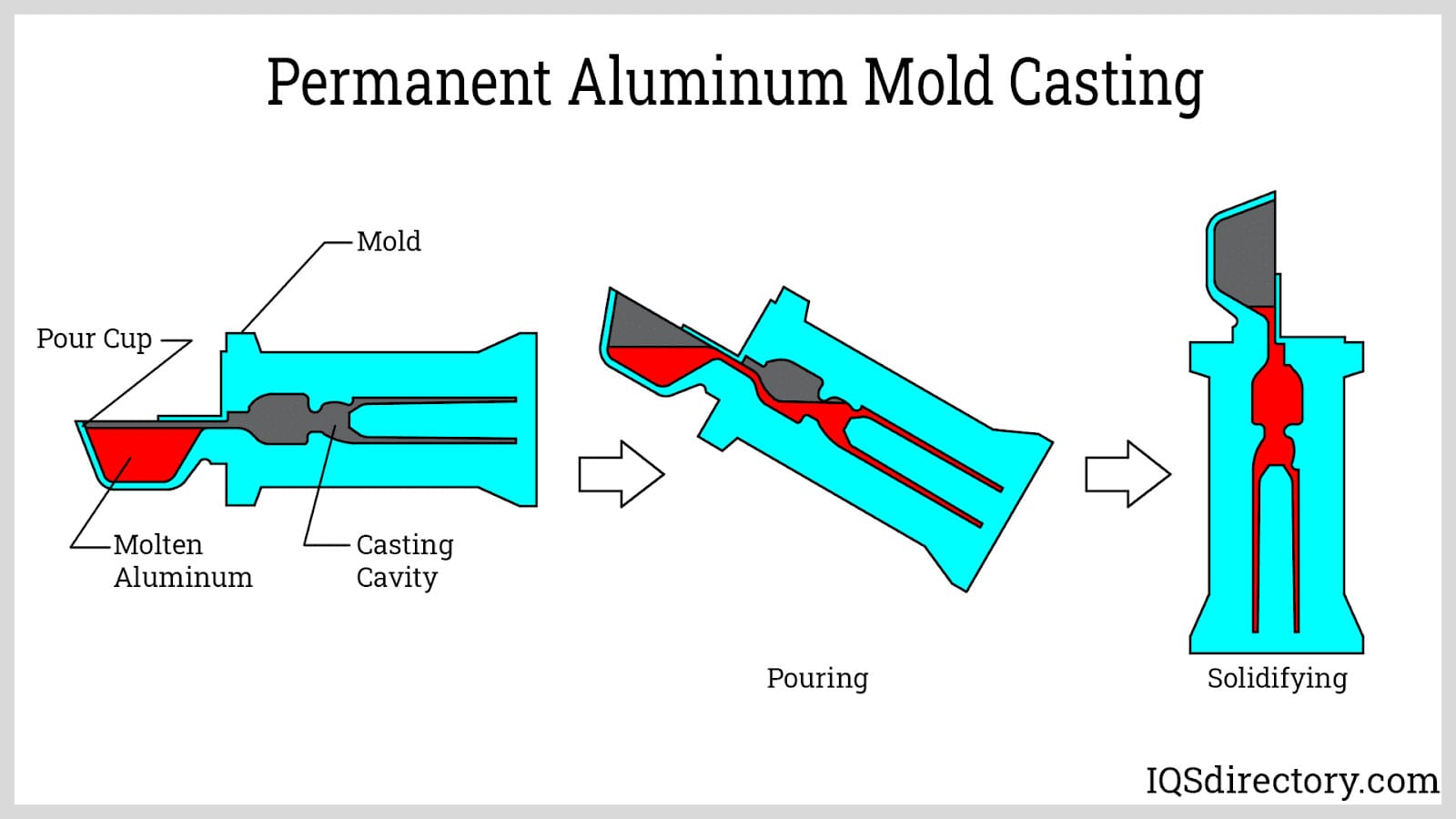
Advantages of Aluminum Contrasted to Various Other Products
The adaptability of Aluminum makes it a remarkable choice over lots of other materials in making applications. One of its key advantages is its lightweight nature, which adds to decreased power usage and boosted effectiveness in transport and building sectors. Furthermore, Aluminum displays excellent corrosion resistance, improving the longevity of items without the demand for comprehensive upkeep.
Light weight aluminum's pliability allows for intricate styles and shapes, catering to varied market needs, from automobile to aerospace. Its thermal and electric conductivity additionally surpasses that of lots of choices, making it perfect for applications needing warmth dissipation or electric transmission.
Aluminum is extremely recyclable, advertising sustainability in making procedures. Compared to steel, it provides a positive strength-to-weight proportion, enabling durable yet light-weight structures. Collectively, these characteristics setting Aluminum as a recommended product, making it possible for manufacturers to achieve both performance and sustainability in their products.
Innovative Casting Strategies in Aluminum Foundries
In the domain of Aluminum manufacturing, innovative casting techniques are revolutionizing the production process and enhancing the material's applications. Amongst these strategies, pass away casting stands out for its capability to generate intricate shapes with high precision and very little waste. This method enables rapid mass production, making it excellent for markets such as automobile and electronics. In a similar way, investment spreading has gained appeal because of its capability to produce elaborate layouts with exceptional surface coating, accommodating both little and large parts.
An additional remarkable technique is sand casting, which uses flexibility and cost-effectiveness for generating bigger components. Recent innovations in 3D printing innovations are also being integrated right into Aluminum casting, allowing quick prototyping and customization. These advancements not just improve effectiveness but additionally increase the possibilities for Aluminum applications across numerous sectors, eventually driving the advancement of modern-day manufacturing methods.
Sustainability Campaigns in Aluminum Manufacturing
Sustainability initiatives in Aluminum production emphasis on boosting reusing processes, which significantly minimize energy consumption and discharges. Carrying out energy efficiency practices additionally contributes to a decreased carbon impact, making Aluminum an extra eco-friendly product. These initiatives reflect the industry's commitment to lasting manufacturing and source preservation.
Reusing Aluminum Advantages
While Aluminum production is resource-intensive, reusing Aluminum offers significant benefits that line up with sustainability campaigns in production. Reusing Aluminum calls for only 5% of the energy needed for main manufacturing, considerably reducing greenhouse gas emissions. This energy effectiveness not only saves all-natural sources yet additionally diminishes the environmental impact related to mining and refining basic materials. Furthermore, recycling Aluminum supports a circular economic climate by reintroducing materials back into the supply chain, thus lessening waste and promoting resource conservation. The process also generates economic benefits via work creation in reusing centers and reduces reliance on international Aluminum resources. In general, reusing Aluminum is an important component of lasting practices that add to a much more environmentally liable production landscape.
Power Efficiency Practices
The Aluminum production market is increasingly taking on energy performance methods to enhance sustainability along with recycling initiatives. These campaigns focus on maximizing energy consumption throughout the production procedure. Makers are implementing sophisticated technologies such as high-efficiency heaters and smart grid systems, which permit far better power monitoring and reduced waste. Furthermore, the assimilation of sustainable power sources, like solar and wind power, is coming to be more common, moreover reducing dependence on nonrenewable fuel sources. Constant monitoring and evaluation of energy usage help with the recognition of inadequacies and possibilities for enhancement. Furthermore, labor force training on energy-saving techniques assurances that employees proactively add to energy preservation efforts, developing a culture of sustainability within the organization. These techniques collectively sustain an even more sustainable Aluminum manufacturing landscape.
Lowered Carbon Footprint
To achieve a decreased carbon impact, the Aluminum manufacturing sector is significantly embracing ingenious sustainability efforts. Business are purchasing innovative modern technologies that minimize energy consumption and emissions during the production process. The integration of renewable resource sources, such as solar and wind power, plays a vital duty in lowering dependence on fossil gas. In addition, the recycling of Aluminum scrap substantially decreases the carbon impact, as recycled Aluminum needs only a fraction of the energy needed for primary manufacturing. Joint initiatives amongst makers, governments, and environmental organizations further drive progression in sustainability. By taking on these measures, the Aluminum market not just addresses ecological problems yet additionally improves its one-upmanship in a market significantly concentrated on environment-friendly methods.
Future Patterns in Aluminum Foundry Modern Technology
Technology goes to the center of Aluminum Foundry modern technology, driving substantial advancements and reshaping market methods. Emerging trends consist of the assimilation of expert system and artificial intelligence, boosting procedure optimization and quality control. These innovations assist in anticipating maintenance, lowering downtime and boosting operational effectiveness. Additionally, the usage of 3D printing and additive manufacturing is obtaining traction, enabling complicated geometries and reduced product waste.
Sustainability continues to be an essential focus, with improvements in recycling methods enhancing the Wisconsin Aluminum Foundry circular economic situation of aluminum. Business are increasingly embracing energy-efficient approaches, such as low-pressure die casting, which lessen power consumption and discharges. Moreover, digital doubles are coming to be commonplace, allowing real-time tracking and simulation of Foundry processes.
Frequently Asked Questions
What Precaution Are in Place at Aluminum Foundries?
Aluminum shops apply different precaution, including protective equipment, correct air flow, fire avoidance systems, regular safety training, and emergency situation procedures to alleviate risks related to heats, liquified steel handling, and possible direct exposure to dangerous materials.
How Do Aluminum Foundries Make Certain High Quality Control Throughout Production?
Aluminum shops execute stringent high quality control actions such as routine inspections, product screening, and adherence to market criteria. These protocols assure consistency in products while decreasing problems, inevitably enhancing the dependability and efficiency of Aluminum components.
What Are the Typical Difficulties Encountered by Aluminum Foundries?
Aluminum foundries frequently encounter challenges such as preserving regular quality, handling manufacturing costs, steering regulative conformity, attending to equipment maintenance issues, and adjusting to varying market needs, all of which can influence operational performance and earnings. - Metal Castings
Just how Does the Aluminum Recycling Process Operate In Foundries?
The Aluminum recycling procedure in foundries entails gathering scrap light weight aluminum, melting it in heaters, eliminating contaminations, and casting the molten steel into preferred forms, thus reestablishing it into the manufacturing cycle effectively and sustainably.
What Are the Job Opportunities Available in Aluminum Foundries?
Work opportunities in Aluminum factories consist of roles such as Foundry drivers, quality assurance examiners, upkeep technicians, designers, and manufacturing supervisors. These settings need numerous skill levels, providing possible for occupation advancement within the production field.
Sustainability campaigns in Aluminum manufacturing focus on enhancing reusing procedures, which substantially minimize energy consumption and emissions. While Aluminum production is resource-intensive, reusing Aluminum provides substantial benefits that straighten with sustainability efforts in manufacturing. Reusing Aluminum calls for only 5% of the energy needed for primary manufacturing, significantly minimizing greenhouse gas emissions. The Aluminum production market is progressively adopting power effectiveness practices to boost sustainability along with reusing initiatives. Additionally, the recycling of Aluminum scrap substantially reduces the carbon footprint, as recycled Aluminum calls for only a portion of the energy required for main production.